
Sul Manifesto di domenica 7 novembre, l’economista Emiliano Brancaccio ha esposto in modo sintetico quella che sarà, con tutta probabilità, la politica economica del prossimo quadriennio trumpiano alla Casa Bianca: “dal fisco, alla spesa sociale, alla regolamentazione del lavoro, la “Trumpnomics 2.0” sarà quella di sempre: una politica economica al diligente servizio del capitale americano” (forse sarebbe stato meglio dire: all’ultra-aggressivo servizio del capitale americano).
Trump, infatti, ha promesso più volte che rafforzerà il suo “Tax Cuts and Jobs Act”. Nel 2017 aveva abbattuto l’imposta massima sui profitti delle imprese dal 35% al 23% (Brancaccio dice, però, al 21%) operando un taglio fiscale da 1.500 miliardi di dollari, che è andato a vantaggio delle 400 famiglie dinastiche più ricche sfondate d’Amerika – mentre l’aliquota fiscale media per il 50% delle famiglie statunitensi meno abbienti era, al 2018, del 24,2% – non era mai successo nella storia degli Stati Uniti che il lavoro salariato pagasse tasse con un’aliquota superiore a quella del capitale. Non contento di questo, Trump intende portare la tassazione del capitale al 15%, “nel tripudio dei grandi azionisti di Wall Street. Inoltre, il nuovo presidente ha annunciato tagli rilevanti al prelievo federale sugli straordinari e sulle pensioni più alte”.
Conseguenza: il crollo fino dei fondi statali per la previdenza sociale di circa il 30%, in modo da “comprimere ancora il residuo welfare pubblico per ripristinare l’assoluto predominio delle assicurazioni private”. Il suo socio Musk ha già quantificato in 2.000 miliardi di dollari il taglio netto da operare sulla spesa sociale complessiva del bilancio federale che oggi ammonta a 6.750 miliardi circa. Il tutto in nome della “efficienza”.
E per incentivare i consumi della classe lavoratrice? Per quelli Trump intende rilanciare “la soluzione che tanto piace al potere finanziario: misure fiscali per dimezzare i tassi d’interesse sulle carte di credito e alleviare il costo dei mutui per l’acquisto di elettrodomestici, autovetture e case. Una delle possibili attuazioni è che le banche ricevano vantaggi fiscali se riducono gli oneri per i consumatori indebitati.
“Se a questo scopo servirà allentare i vincoli a un nuovo boom dei debiti, nessun problema: Trump è intenzionato a rimuovere gli ultimi lacci normativi che imbrigliano la finanza. Per molti versi, sembra la riedizione degli anni ruggenti che precedettero la crisi del 2008. La bolla speculativa che gonfia l’economia americana si espanderà ancora prima di scoppiare. Alla fine, stesi per terra, si ritroveranno i lavoratori in bancarotta”. La ricetta “magica” dell’aumento dell’indebitamento dei proletari come strumento utile di soggiogamento e di incremento dello sfruttamento – più si è indebitati, più, per cercare di uscire dall’incubo, si cerca con affanno il lavoro, si ricorre allo straordinario, si sta lontani da qualsiasi forma di conflitto con i padroni.
Quanto poi alla promessa di riportare negli Stati Uniti gli impianti delle multinazionali attraverso il blocco delle importazioni e i dazi protettivi, Brancaccio osserva, giustamente, che “il protezionismo di Trump non costituisce affatto un’eccezione. Da Obama a Biden, da oltre un quindicennio le amministrazioni Usa stanno alzando barriere commerciali e finanziarie sempre più alte. È quello che la segretaria al Tesoro uscente ha definito friend shoring: fare affari solo con gli “amici” e tenere alla larga i “nemici”, specialmente se creditori verso l’America”. Con quali risultati effettivi per “i lavoratori nativi”? Non pervenuti. Certo, i capitalisti statunitensi di imprese decotte o in difficoltà crescenti rispetto ai concorrenti europei o asiatici, ne beneficeranno, con una certa protezione anche per i loro dipendenti, che saranno comunque pressati ad intensificare la produttività – la boutade propagandistica di Musk sul “lavorare 80 ore a settimana gratuitamente” per il suo Dipartimento, non riguarda certo i suoi privilegiati collaboratori che saranno retribuiti profumatamente, è invece un messaggio ai lavoratori comuni affinché lavorino sodo senza lamentarsi dei salari che prendono. E, naturalmente, senza ricorrere ai sindacati che per Musk e simili vanno distrutti.
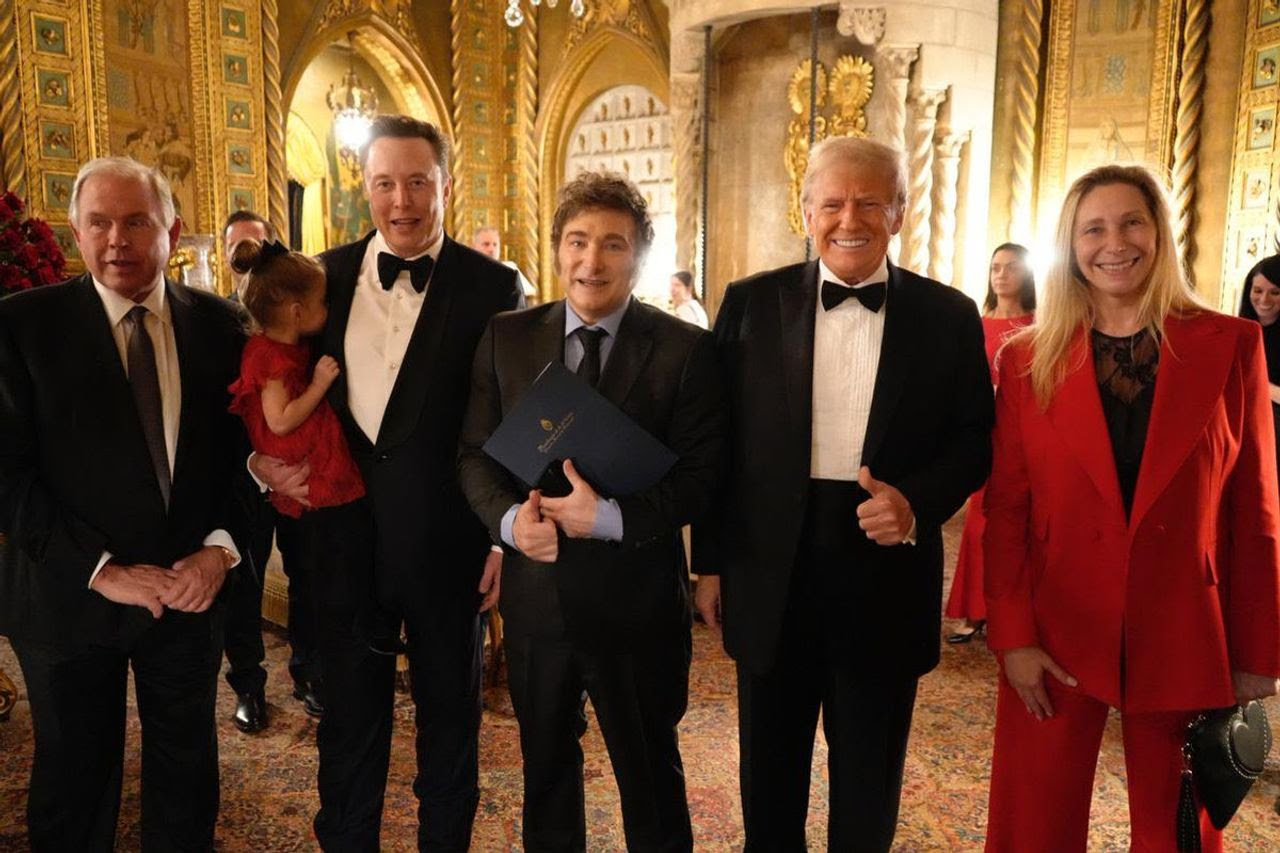
Se qualcuno avesse ancora dei dubbi su quale sarà la “Trumpnomics 2.0” (per quanto sia inverosimile, e lo è, in Italia ci sono ancora ammiratori di Trump che pretendono di essere “compagni”!), li ha sciolti ieri Trump in persona ricevendo a Mar-a-Lago il presidente dell’Argentina Milei, primo capo di stato ad incontrarlo dopo la sua rielezione, con questo saluto: “Il lavoro che hai fatto è incredibile. Make Argentina Great Again, ecco, MAGA. Lui è un individuo MAGA”. In precedenza aveva definito Milei “un modello per il resto del mondo“, ed è noto che il ministro Sturzenegger, uno dei più fanatici affamatori delle lavoratrici e dei lavoratori dell’Argentina, è stato nei mesi scorsi a colloquio con Musk su come de-regolare l’economia statunitense. Dalle testimonianze e dalle lotte del Polo Obrero e del Partido Obrero che abbiamo più volte ripreso e rilanciato su questo blog, i nostri lettori dovrebbero essere informati quale tipo di “incredibile lavoro” Milei abbia fatto in appena nove mesi: 3-400.000 disoccupati in più, inflazione alle stelle con riduzione dei salari dei pubblici dipendenti del 16,5% e degli occupati più stabili nell’industria del 2%, tagli brutali (dal 28 al 60%) alla spesa statale per la salute, l’educazione, le mense popolari, leggi di polizia per stroncare le manifestazioni (senza, però, riuscirci) e feroce attacco giudiziario e massmediatico ai dirigenti del Polo Obrero e del movimento piquetero. Sul versante-guerra, poi, Milei aveva già concluso con l’amministrazione Biden accordi per la vendita di aerei e la costruzione in Argentina di fabbriche a capitale yankee per la produzione di munizioni … E’ chiaro di che modello si tratta?
Trump’s economic policy: tears and blood cubed
In the Manifesto of Sunday, November 7, the economist Emiliano Brancaccio effectively exposed what will be, in all likelihood, the economic policy of the next four years: “from taxation, to social spending, to labor regulation, the “Trumpnomics 2.0” will be the same as always: an economic policy at the diligent service of American capital” (perhaps it would have been better to say: at the ultra-aggressive service of American capital).
Trump, in fact, has repeatedly promised that he will strengthen his “Tax Cuts and Jobs Act”. In 2017 he had lowered the maximum tax on corporate profits from 35% to 23% (Brancaccio says, however, to 21%) by making a $1,500 billion tax cut, which benefited the 400 richest dynastic families in America – while the average tax rate for the bottom 50% of US families was, as of 2018, 24.2% – it had never happened in the history of the United States that wage labor paid taxes at a higher rate than capital. Not content with this, Trump intends to further lower the taxation of capital to 15%, “to the jubilation of the large shareholders of Wall Street. In addition, the new president has announced significant cuts to the federal levy on overtime and higher pensions.”
The obvious consequence: the collapse of state funds for social security by about 30%, in order to “further compress the residual public welfare to restore the absolute dominance of private insurance”. His partner Musk has already quantified the net cut to be made on the total social spending of the federal budget at $2,000 billion, which today amounts to about $6,750 billion. All in the name of “efficiency”.
And to incentivize the consumption of the working class? For those, Trump intends to relaunch “the solution that financial power likes so much: fiscal measures to halve interest rates on credit cards and alleviate the cost of mortgages for the purchase of household appliances, cars and houses. One of the possible implementations is for banks to receive tax advantages if they reduce the burden on indebted consumers.
“If this is done by loosening the constraints on a new debt boom, no problem: Trump is intent on removing the last regulatory ties that rein in finance. In many ways, it feels like a repeat of the roaring years that preceded the 2008 crisis. The speculative bubble inflating the American economy will expand even before bursting. In the end, lying on the ground, the workers will find themselves bankrupt”. The “magic” recipe of increasing the indebtedness of the proletarians as a useful tool for subjugation and increase exploitation – the more indebted one is, the more, in order to try to get out of the nightmare, one frantically seeks work, resorts to overtime, stays away from any form of conflict with the bosses.
As for the promise to bring the plants of multinationals back to the United States through the blocking of imports and protective duties, Brancaccio observes, rightly, that “Trump’s protectionism is by no means an exception. From Obama to Biden, for over fifteen years US administrations have been raising ever higher trade and financial barriers. It is what the outgoing Treasury Secretary called friend shoring: doing business only with “friends” and keeping “enemies” away, especially if they are creditors to America”. With what actual results for “native workers”? Not received. Of course, the US capitalists of companies that are in increasing difficulty compared to European or Asian competitors will benefit, with a certain protection also for their employees, who however will still be pressured to intensify productivity – Musk’s propaganda joke about “working 80 hours a week for free” for his Department, certainly does not concern his privileged collaborators who will be paid handsomely, Instead, it is a message to ordinary workers to work hard without complaining about the wages they get. And, of course, without resorting to unions that for Musk and the like must be destroyed.
If anyone still had doubts about what “Trumpnomics 2.0” will be (as far-fetched as it is, in Italy there are still Trump admirers who claim to be “comrades”!), Trump dissolved them yesterday in person by receiving at Mar-a-Lago the president of Argentina Milei, the first head of state to meet him after his re-election, with this greeting: “The work you have done is incredible. Make Argentina Great Again., you now, MAGA. He is a MAGA person”. He had previously called Milei “a model for the rest of the world“, and it is known that Minister Sturzenegger, one of Argentina’s most fanatical starving workers, has been in talks with Musk in recent months on how to de-regulate the US economy. From the testimonies and struggles of the Polo Obrero and the Partido Obrero that we have repeatedly taken up and relaunched on this blog, our readers should be informed what kind of “incredible work” Milei has done in just nine-ten months: 3-400,000 more unemployed, high inflation with a reduction in the salaries of public employees by 16.5% and of the most stable employees in industry by 2%, brutal cuts (from 28 to 60%) in state spending on health, education, soup kitchens, police laws to crush demonstrations (without, however, succeeding) and fierce judicial and mass media attacks against the leaders of the Polo Obrero and the Piquetero movement. On the war side, then, Milei had already concluded agreements with the Biden administration for the sale of planes and the construction in Argentina of factories with Yankee capital for the production of ammunition … Is it clear what model it is?