
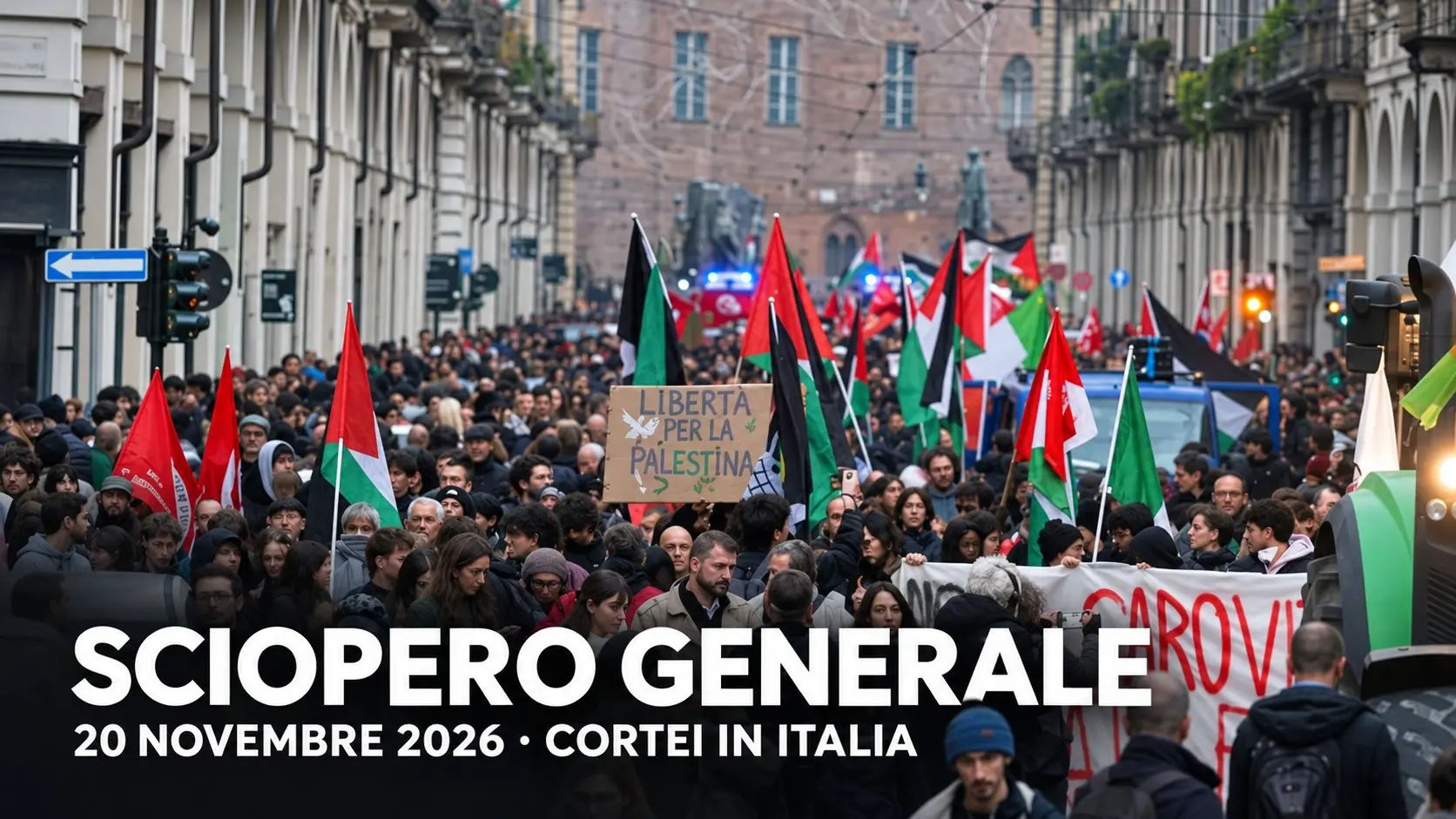
Doveva essere una forte giornata di lotta internazionale contro carovita, guerra e stato di polizia, e tale è stata, sebbene senza numeri-record.
Il numero, però, non è tutto. L’importanza particolare della giornata di venerdì (Italia a parte) era nell’iniziativa decisa a Colonia, nel giugno scorso, di uno sciopero internazionale (europeo) “dei giovani”, scuole e università anzitutto, e nella sua parola d’ordine: “Lottiamo per il nostro futuro, non per le loro guerre” – con un doppio riconoscimento di rilievo: il futuro delle nuove generazioni rischia di essere ipotecato dalle guerre “loro”, dei capitalisti cioè, e degli stati dei capitalisti. Per cui sarà possibile conquistare un futuro diverso da quello segnato dalle guerre solo unendoci in una lotta internazionale per affermare i nostri bisogni, le nostre necessità.
Non è ancora il grido di battaglia “guerra alla guerra” e – tanto meno – “rivoluzione sociale contro la guerra del capitale”, ma è di sicuro un passo nella direzione da noi internazionalisti militanti auspicata. E corrisponde ad un risveglio sociale e politico che ha visto di nuovo in piazza venerdì centinaia di migliaia di giovani in centinaia di città europee dalla Francia alla Germania, dal Regno Unito all’Italia, dalla Spagna alla Serbia all’Albania.
Per quanto i mass media di regime insistano sul carattere meramente generazionale della mobilitazione cercando così di ridimensionarla e isolarla (la Z Generation), le rivendicazioni emerse nella quasi totalità delle piazze hanno avuto, invece, un carattere trasversale alle diverse generazioni: su tutte la contrapposizione tra spese per i bisogni sociali e spese militari, la denuncia del carovita e della repressione, del genocidio di Gaza e (almeno in alcune piazze) dell’assedio yankee al popolo cubano.
Le organizzazioni giovanili che hanno chiamato questa giornata di lotta, sarebbe sciocco nasconderselo, sono legate in vario grado alla sinistra istituzionale più o meno “estrema”, ma pur sempre interna alle istituzioni democratiche – come nel Regno Unito Jeremy Corbyn e il suo Your Party, ambigui su tutto, mai disposti a dire una sola parola chiara di carattere disfattista e internazionalista contro gli interessi dell’imperialismo britannico. Tuttavia proprio questo aspetto rende ancor più evidente la forza e l’urgenza dell’oggettività : la necessità di prendere posizione sulla corsa al riarmo e alla guerra globale si impone a livello giovanile anche nel campo delle forze della sinistra riformista che sono legate a doppio filo ai rispettivi capitalismi nazionali – in Italia AVS e qualche scheggia isolata dei Cinquestelle. Se la mobilitazione continuerà e le forze coerentemente anti-capitaliste sapranno intervenire in essa con efficacia, crescerà la divaricazione tra le masse giovanili scese in campo e le forze “riformiste” o “progressiste” interne alle istituzioni. E lo stesso proletariato industriale rimasto finora, con l’eccezione della Spagna e, parzialmente, dei portuali, alla finestra, sarà spinto verso una maggiore attivizzazione.
Sotto questo profilo, il 20 era un test importante proprio in Italia, dal momento che la CGIL di Landini aveva pensato bene di indire proprio venerdì il suo sciopero generale in solitaria rispetto a CISL e UIL, affiancandosi alla protesta giovanile e studentesca nel furbo tentativo di intestarsela. I dati sindacali sono inattendibili (un milione e mezzo nelle piazze, e il 60% di adesioni allo sciopero tra pubblico e privato), ma l’adesione allo sciopero è stata, nel complesso, superiore alle previsioni (e ai timori della vigilia dei dirigenti del sindacato). C’è stata una discreta adesione anche nell’industria. Va detto, però, senza nessun segnale di esplicito rifiuto dell’accordo-capestro firmato giorni fa con le associazioni padronali che garantisce ai padroni la riduzione dei salari in cambio del monopolio della rappresentanza a CGIL-CISL-UIL. Nei capannelli i nostri compagni e le nostre compagne hanno dovuto insistere parecchio su questo punto per far emergere riserve o critiche da parte di singoli lavoratori (quasi mai giovani) presenti nei cortei – anche se nessuno si sentiva di difenderlo.
Il rapporto tra la mobilitazione dello Youth Strike e quella della CGIL è stato differente nelle diverse città variando dalla confluenza dei due cortei in uno solo, in qualche caso (come a Milano) con un accodamento del corteo sindacale a quello dei giovani, alla reciproca estraneità. Momenti di vera e propria contrapposizione alla CGIL (con le sagome dei burocrati sindacali dati alle fiamme come a Napoli) ci sono stati solo nei modesti cortei o spezzoni di corteo separati organizzati da USB-Potere al popolo, anch’essi peraltro, come quello della CGIL, proiettati verso la scadenza elettorale.
Non c’è dubbio che venerdì le piazze giovanili abbiano espresso contenuti politici più radicali di quelle sindacali, in specie per la centralità assegnata al rifiuto della corsa alla guerra – ed anche per la forza con cui hanno messo in campo le rivendicazioni della tutela dell’istruzione pubblica, universale e gratuita, la denuncia del carovita e della violenza insita nella distruzione dell’ambiente e, per altro verso, del sistema sanitario. Nei cortei e negli spezzoni sindacali, invece, in qualche caso numerosi, affollati più che nei tre precedenti scioperi generali contro il governo Meloni, predominavano la passività e il silenzio. Nelle onnipresenti declamazioni di Landini dominante è stata la assoluta vaghezza delle rivendicazioni: la finanziaria “fa schifo”, ma cosa di preciso le contrappone la CGIL? Nient’altro che dichiarazioni roboanti e vuote per un non meglio specificato “cambiamento” (sfilare con accanto la Schlein dà l’idea di quale cambiamento si tratti), per “pensioni e salari più alti, lavoro stabile e sicuro, la restituzione del drenaggio fiscale, più risorse per scuola e sanità, meno per le armi”. Ma senza nessuno specifico obiettivo da perseguire con la lotta e su cui centrare le prossime azioni di lotta. Uno spot elettorale per il “campo largo”, insomma.
La maggiore partecipazione dei lavoratori allo sciopero e ai cortei indica che qualcosa inizia a muoversi, ma siamo lontani, in Italia, da una ripresa generalizzata, e neppure localizzata, dello scontro di classe – nella stessa logistica si riscontra da tempo, grazie anche al parere ammazza-scioperi della Commissione di garanzia, una forte riduzione della conflittualità dei facchini e dei driver.
Insomma, luci ed ombre di una giornata di lotta che resta, comunque, importante su un cammino di ripresa che si prevede lungo e complicato, ma è iniziato anche in Italia con un forte protagonismo di quella che noi preferiamo chiamare Gaza Generation. I prossimi appuntamenti di lotta della prima metà di dicembre sono chiamati a confermare e far avanzare ulteriormente questo processo.
Per quello che ci riguarda, insisteremo sui temi che abbiamo proposto venerdì nei cortei e sulla necessità di lavorare ad uno sciopero generale europeo contro i governi del carovita, della guerra e dello stato di polizia – una prospettiva anticipata, tra l’altro, proprio dalla giornata di lotta del 20 novembre.


On the international day of struggle of November 20th
It was intended to be a powerful day of international struggle against the high cost of living, war, and the police state—and so it proved to be, even if it did not reach record-breaking numbers.
Numbers, however, are not everything. The particular significance of Friday’s events (Italy aside) lay in an initiative decided upon in Cologne last June: an international (European) strike by “young people”—primarily those in schools and universities—centered on the slogan: “We are fighting for our future, not for their wars.” This carries a crucial dual realization: the future of the new generations is at risk of being mortgaged by “their” wars—that is, the wars of the capitalists and the capitalist states. Therefore, the only way to secure a future different from one defined by war is to unite in an international struggle to assert our own needs and requirements.
While this may not yet amount to a battle cry of “war against war”—let alone “social revolution against the war of capital”—it is certainly a step in the direction that we, as militant internationalists, have long advocated. It reflects a social and political awakening that, this past Friday, brought hundreds of thousands of young people out into the streets across hundreds of European cities—from France to Germany, the United Kingdom to Italy, and Spain to Serbia and Albania.
Although the establishment media insist on framing this mobilization as purely a generational phenomenon—an attempt to downplay and isolate it (as “Generation Z”)—the demands voiced in almost every location were, in fact, cross-generational. Foremost among them were the opposition between spending on social needs versus military expenditure, the denunciation of the high cost of living and state repression, the condemnation of the genocide in Gaza, and—in some locations—the opposition to the Yankee siege of the Cuban people. It would be foolish to deny that the youth organizations that called for this day of struggle are, to varying degrees, linked to the institutional left—a left that may be more or less “extreme,” yet remains firmly within the framework of democratic institutions. Examples include Jeremy Corbyn and his movement in the United Kingdom—ambiguous on every issue, and never willing to utter a single clear, defeatist, or internationalist word against the interests of British imperialism. Nevertheless, this very fact highlights the strength and urgency of the objective situation: the need to take a stand against the arms race and the drift toward global war is asserting itself among the youth, even within the ranks of the reformist left—forces that are inextricably tied to their respective national capitalisms (in Italy, for instance, the AVS and certain isolated fragments of the Five Star Movement). If this mobilization continues, and if consistently anti-capitalist forces can intervene effectively, the rift between the mobilized youth and the “reformist” or “progressive” forces within the institutions will only widen. Furthermore, the industrial proletariat—which, with the exception of workers in Spain and—to some extent—port workers, has largely remained on the sidelines—will also be pushed toward greater, more active engagement.
In this light, the 20th served as an important test, particularly in Italy. Landini’s CGIL—choosing to call a solo general strike on that very Friday, separate from the CISL and UIL—sought to align itself with the youth and student protests in a cunning attempt to claim credit for them. While the union’s own figures are unreliable (claiming 1.5 million people in the streets and a 60% strike participation rate across the public and private sectors), the overall level of participation in the strike was higher than anticipated—and higher than what the union leadership had feared on the eve of the event. There was a fair level of participation in the industrial sector as well. It must be noted, however, that there was no explicit rejection of the draconian agreement signed days ago with employers’ associations—an agreement that guarantees bosses a reduction in wages in exchange for granting the CGIL, CISL, and UIL a monopoly on labor representation. In small group discussions, our comrades had to press quite hard on this point to elicit any reservations or criticisms from individual workers (almost never young ones) present at the marches—though, in truth, no one felt inclined to defend the agreement.
The relationship between the “Youth Strike” mobilization and that of the CGIL varied from city to city; in some cases, the two marches merged into one—sometimes (as in Milan) with the trade union contingent trailing behind the youth—while in others, they remained entirely separate and unrelated. Instances of direct confrontation with the CGIL—such as the burning of effigies of union bureaucrats in Naples—occurred only within the smaller, separate marches or contingents organized by the USB and Potere al Popolo (Power to the People), which, much like the CGIL’s mobilization, were also focused on the upcoming elections.
There is no doubt that, on Friday, the demonstrations led by young people expressed more radical political content than those organized by the trade unions—notably through their central focus on rejecting the drive toward war, as well as their forceful advocacy for the protection of universal, free public education. They also highlighted the rising cost of living, the violence inherent in environmental destruction, and the dismantling of the healthcare system. In contrast, the trade union-led marches and contingents—which were, in some instances, larger and more crowded than during the three previous general strikes against the Meloni government—were characterized primarily by passivity and silence. In the ubiquitous pronouncements of [CGIL leader] Maurizio Landini, the demands remained strikingly vague: the budget law is “disgusting,” but what exactly does the CGIL propose as an alternative? There was nothing beyond grand, empty rhetoric calling for an unspecified “change” (marching alongside Elly Schlein gives a clear indication of what kind of change is meant)—demands for “higher pensions and wages, stable and secure employment, the reversal of ‘fiscal drag,’ more resources for schools and healthcare, and less for weapons.” Yet, there were no concrete objectives to pursue through struggle, nor any clear focus around which to organize future actions. In short, it was little more than an electoral pitch for the “broad coalition” (campo largo).
While the increased participation of workers in the strike and the marches suggests that things may be starting to shift, we remain far from any generalized—or even localized—resurgence of class conflict in Italy. Even within the logistics sector, one observes a significant decline in militancy among warehouse workers and delivery drivers—a trend exacerbated by the “strike-killing” rulings issued by the Guarantee Commission. In short, there were both bright spots and shortcomings during a day of struggle that remains, nonetheless, an important step on a path toward recovery—a path expected to be long and complicated, yet one that has begun in Italy, driven in large part by what we prefer to call the “Gaza Generation.” The upcoming actions planned for the first half of December will be crucial in confirming and further advancing this process.
For our part, we will continue to emphasize the issues we raised during Friday’s demonstrations, as well as the need to work toward a Europe-wide general strike against governments that fuel the high cost of living, war, and the police state—a prospect that was, in fact, foreshadowed by the day of action on November 20th.